Sport
Landmark
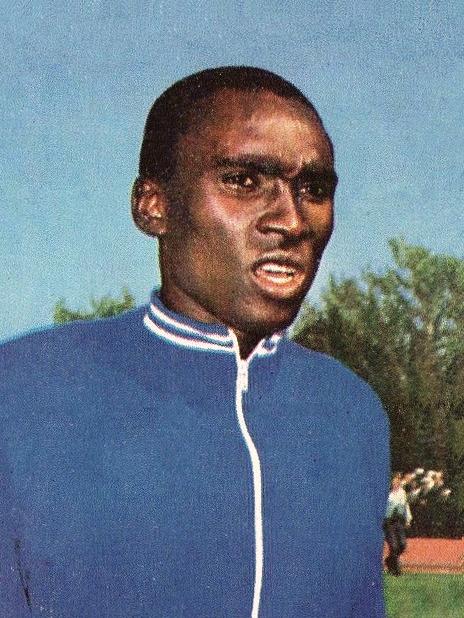
John Akii-Bua
1949 – 1997
Uganda's first Olympic champion, and a world record from lane one
Landmark is level 2 of 4 in the Uganda Hall of Fame: a first that opened a door, or the pre-eminent figure of their generation in this country. See how the levels work.
Why they are here
He won the 400 metres hurdles at Munich in 1972 in 47.82 seconds — a world record, run from the inside lane where a hurdler cannot see the field — and gave Uganda its first Olympic gold medal.
John Akii-Bua was a policeman from Lira, one of more than forty children of a Lango chief, and had been hurdling for barely three years when he reached the Munich Olympics.
He drew lane one, the worst in the race, where the tightest bend costs speed and the runner cannot see a single rival. He ran the whole thing blind and won in 47.82 seconds, the first man under forty-eight, a world record — and then took a lap of honour hurdling the barriers again on the way round, which is the footage everyone has seen. It was Uganda's first Olympic gold medal.
He was denied the chance to defend it when African nations boycotted the 1976 games. Under Idi Amin he was watched, and after the fall of the regime in 1979 he fled with his family across the border, spending time in a Kenyan refugee camp before Puma, his former sponsor, traced him and brought him to Germany. He returned home in the 1980s and worked again with the Ugandan police and as a coach. He died in 1997, and the national stadium's athletics track carries his name.
He drew lane one, the worst in the race, where the tightest bend costs speed and the runner cannot see a single rival. He ran the whole thing blind and won in 47.82 seconds, the first man under forty-eight, a world record — and then took a lap of honour hurdling the barriers again on the way round, which is the footage everyone has seen. It was Uganda's first Olympic gold medal.
He was denied the chance to defend it when African nations boycotted the 1976 games. Under Idi Amin he was watched, and after the fall of the regime in 1979 he fled with his family across the border, spending time in a Kenyan refugee camp before Puma, his former sponsor, traced him and brought him to Germany. He returned home in the 1980s and worked again with the Ugandan police and as a coach. He died in 1997, and the national stadium's athletics track carries his name.
Spotted something wrong? Tell us and we will check it.